
How healthy leaders create lasting impact

 Adobe
Adobe
 ChatGPT
Let me tell you about my friend Rick. He's not seminary trained. He's not ordained. He's not a missionary. Vocationally, he is salesman.
Rick wasn't trying to start a movement. He wasn't chasing a new model or brand. In fact, what marked him most at the beginning wasn't confidence—it was attentiveness.
Rick noticed something others had learned to overlook.
Families in his community who had children or adults with disabilities loved Jesus, but struggled to find a church where they could truly belonged. Not where they were accommodated—but where they were seen.
Instead of rushing to solve the problem, Rick slowed down.
He listened. He learned. He paid attention—to God, to people, and to his own limitations. He made himself available.
That posture mattered.
From a health standpoint, Rick was grounded. Spiritually, he was listening before acting. Relationally, he was deeply connected to the families he served. Mentally, he wasn't driven by comparison or urgency. Physically, he paced himself for the long haul.
And then he practiced multiplication.
Rick didn't try to do everything himself. He invited others into the vision. He developed leaders from within the community—many of whom had never been seen as "leaders" before. Together, they launched a church that didn't just serve people with disabilities—it was led by them. This simple expression of church meets every Sunday night at 6pm and 50-75 people gather. My wife affectionately calls it, "beautiful chaos."
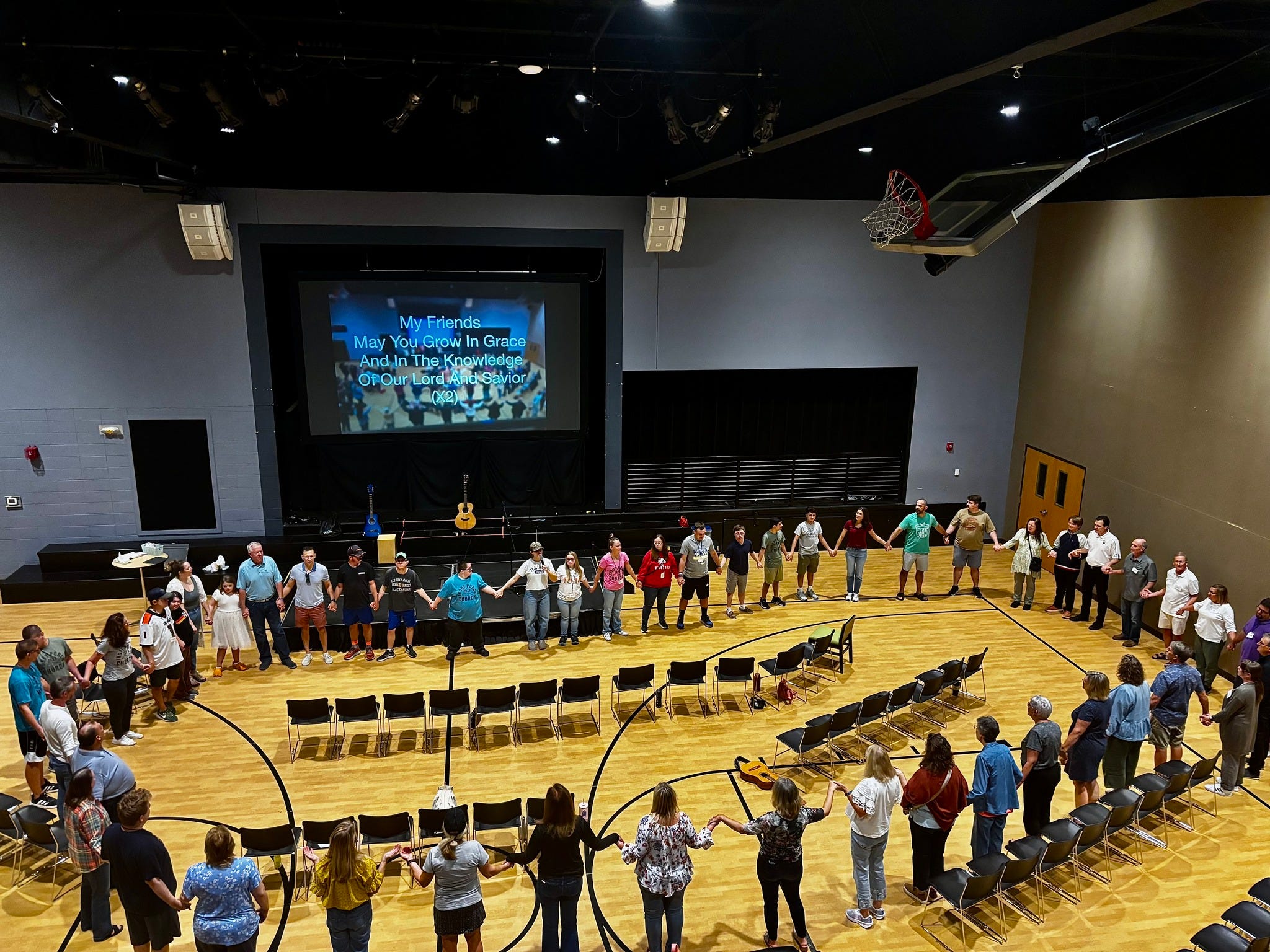
This is a gathering of the all-abilities church that my friend Rick started.
What began as a single expression of church has multiplied.
Other leaders noticed. Other communities asked questions. New expressions began to emerge in new places—not because Rick was trying to scale something, but because health and practice created momentum.
That's how movements usually start.
Not with ambition—but with alignment in between your inner life and outer practice.
What do you hope is true about you in the future?
Rick's story raises an honest question for all of us: What kind of impact might God trust us with if we focused on becoming healthy—and practiced multiplication faithfully?
Let me ask you a question to start:
When you think about your leadership five, ten, or twenty-five years from now, what do you most hope is true about you?
Not just what you've accomplished—but who you've become, and what's multiplied through your life.
That question sits at the heart of Multiplier.
Why health has to come first
One of the core convictions behind my new book is very simple but also challenging: You reproduce who you are and what you do.
That means leadership is never neutral. Over time, it multiplies something—health or un-health, clarity or confusion, generosity or scarcity.
Most leaders don't drift because they stop caring about the mission. They drift because the mission keeps advancing while their inner life quietly lags behind.
That's why Multiplier begins with health.
Not as a detour from impact—but as the pathway to lasting impact.
Let me pause and invite you to reflect: Where do you feel healthy right now? And where do you feel stretched thin or off balance?
If you're willing, you might even name that in the comments. Naming it often brings clarity.
The four gauges: paying attention to the inner life
Over years of leadership, coaching, and walking with pastors and teams, I noticed that drift tends to show up in predictable places. That's why the Multiplier Tool names four gauges—not to judge leaders, but to help them pay attention. We talked about this in my previous article, but let's review again.
Think of gauges like the dashboard of a car. They don't create problems; they reveal them early. When you drive, you've got gauges—gas gauge, oil gauge, temperature gauge–several gauges. If one of them is empty, overheated or low, you ignore it at your own risk! Here are the four gauges of your inner life along with some questions to help you check your gauges:
#1 Relational
- How healthy are your closest relationships?
- Are you present, connected, and honest—or distant and distracted?
#2 Physical
- Is your body supporting your leadership or quietly sabotaging it?
- How is your energy, sleep, pace, and margin? They matter more than we often admit.
#3 Mental
- What's shaping your thoughts right now?
- Are you leading from clarity and truth—or from anxiety, comparison, or exhaustion?
#4 Spiritual
- Are you abiding—or just producing?
- Is your leadership flowing from intimacy with God or running on fumes?
Here's an honest question: Which of these gauges tends to drift first for you?
You don't need to fix it right now. Just notice it. Awareness is the beginning of wisdom.
The four practices: turning health into multiplication
Health matters—but health alone doesn't multiply. Healthy leaders who practice multiplication do.
That's why the Multiplier Tool also includes four practices—not as programs to implement, but as ways to multiply your impact. These are the exact same practices we saw Jesus do in his ministry. From the moment he said in Mark 1:17,"Come, follow me and I will send you out to fish for people."until he left us with a challenge in Acts 1:8 "…and you will be my witnesses in Jerusalem, and in all Judea and Samaria, and to the ends of the earth"
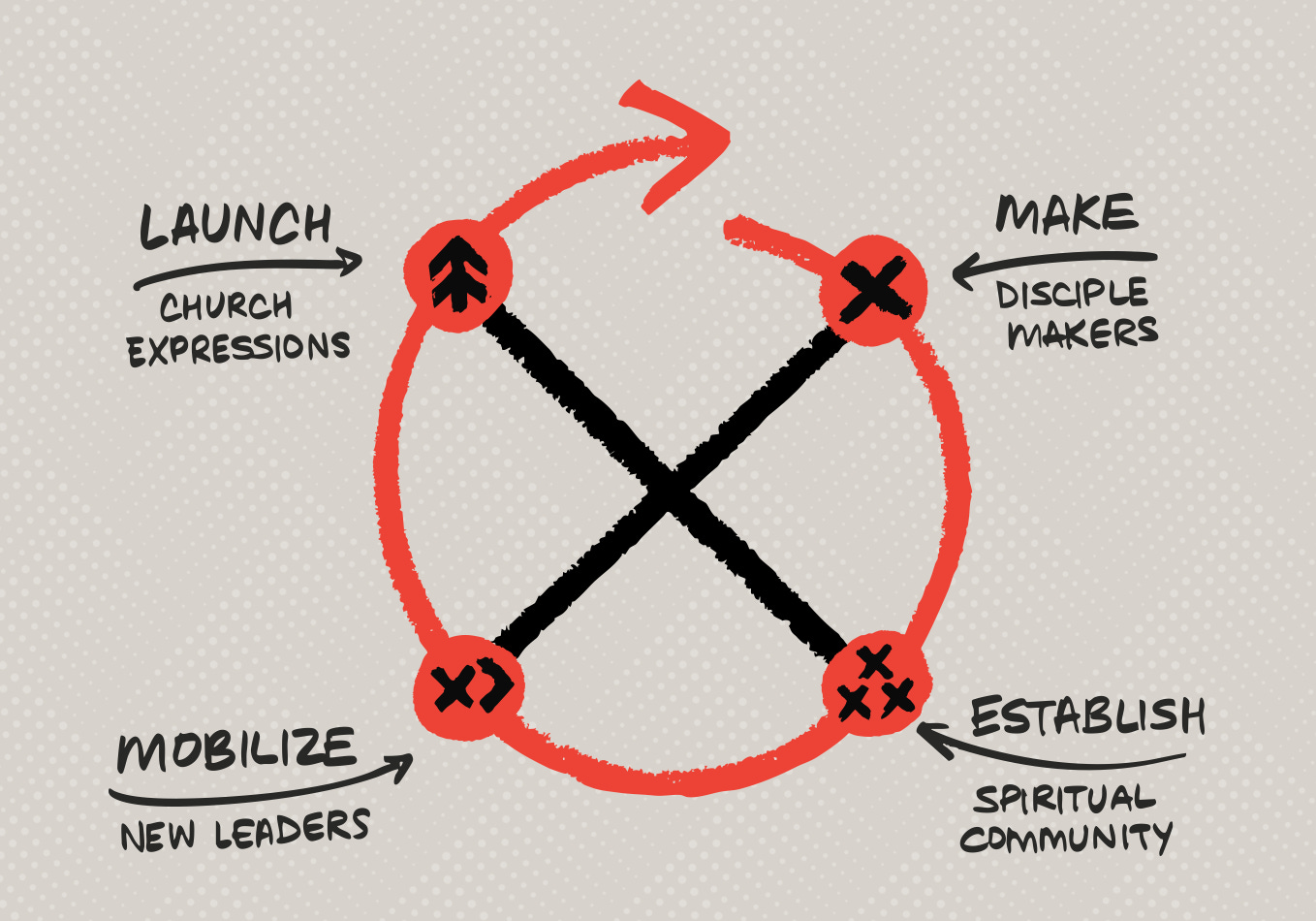
This is how the Multiplier Tool explains the four practices of multiplication. The circle represents you. The "X" in the middle of the circle is the multiplication and movement making potential inside you.
Jesus used these four practices. In the same way he used them to catalyze a movement, we can too! Here they are…
#1 Make disciple makers
Multipliers don't just gather disciples; they develop disciple-makers who develop other disciple-makers. Can you name the people you are forming into disciple-makers? Would they affirm that is what you are doing? If you can't name them and they wouldn't name you — you probably are not making disciple-makers. This is where Jesus started and so should we!
#2 Establish spiritual communities
Multipliers cultivate environments where formation happens naturally—in groups, teams, missional communities and through shared life. Relationships are the catalyst for spiritual growth. Jesus understood this and when he called the initial disciples to follow him he put the twelve together in a spiritual community. We should do the same!
#3 Mobilize new leaders
Multipliers release responsibility, invite ownership, and create space for others to lead. They are making heroes of others. The leaders who make the greatest impact don't hoard leadership—they continually hand it off. In Acts 6, when the church grew, the apostles didn't say, "We'll just work harder." No! They raised up new leaders. They released responsibility.
So, look around at your small group, missional community, staff team or the disciple makers you have convened into a spiritual community and commission those who are ready to do what you did - make more disciple-makers within the circle of relationships.
#4 Launch church expressions
Multipliers recognize that some of the new leaders you mobilize will launch church expressions. I intentionally use that term because Multiplier will hold the mission loosely enough to let it take new forms in new places.
This practice sounds intimidating—but it's simpler than you might think. Launching a new expression of church doesn't mean raising money, renting a building and hiring staff.
I have a very simple ecclesiology (definition of church). I think a church can be simply defined as "a community of people who are on mission together where Jesus is Lord.." Leave me a comment and let me know what you think.
I promise you—if you will do all four of these practices and in the process teach others to do the same—over the course of a lifetime you and the people in your family tree of disciple-making will impact millions and millions of people for Jesus.
Here's what I've learned the hard way: Multiplication rarely happens accidentally.
It happens when healthy leaders practice it intentionally.
Let me turn this back to you: Which of these practices feels most natural to you—and which one tends to get crowded out when life gets busy?
That awareness can be catalytic.
 | Dave Ferguson is the CEO / President and co-founder for Exponential. He is also the lead pastor of Community Christian Church, an innovative multi-site missional community that is passionate about “helping people find their way back to God.” Community has grown from a few college friends to thousands every weekend meeting at multiple locations in the Chicago area and has been recognized as one of America’s most influential churches. Learn More » |
More on Vision & Culture
- Follow forward in God’s adventure (by Tim Tucker)
- Jesus changed the world through culture, not politics. Here’s how you can too (by Jordan Raynor)
- The data-backed case for an unlikely solution to America’s decline (by Dave Ferguson)
- Leading with foresight when worship cultures collide (by Bob Whitesel)